Costa Rica – Part 2
Day 4 (21st Jan) Carara National
Park
Hotel Pumilio grounds (6am) The hotel was
a new addition to the Naturetrek itinerary, and the grounds were pretty much
written-off. Well, I like a challenge, so Matt and I had a look around at dawn
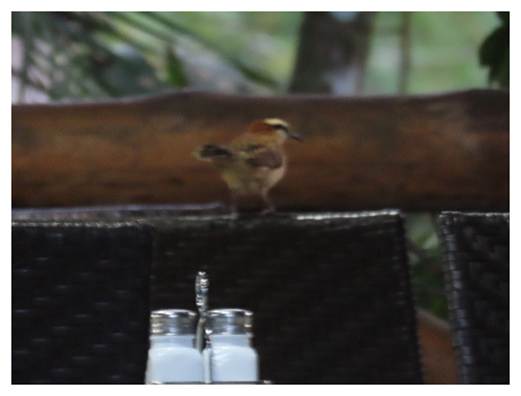
and found some interesting things. The first was a couple of Rufous-naped
Wrens in the outside restaurant area (poor photo unfortunately).
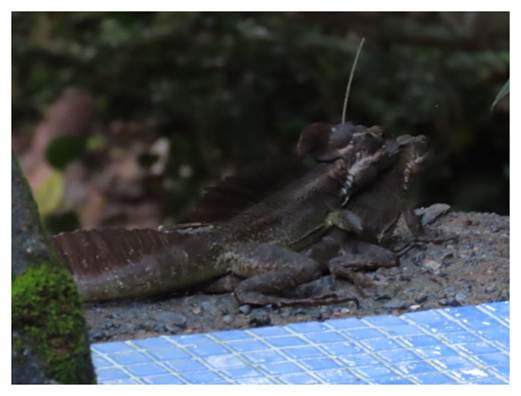
Steve was already out on his balcony and pointed out these
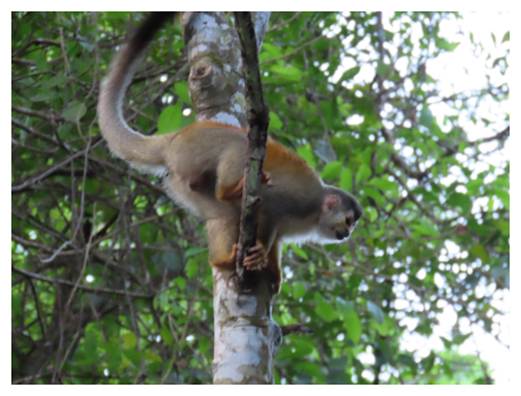
mating Brown Basilisks by the pool and the amazing sight of a Squirrel
Monkey !
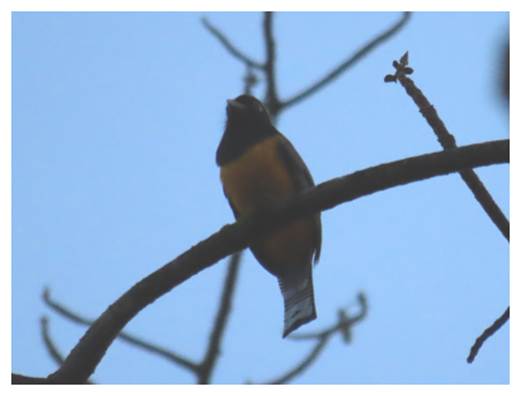
We then found a Lesson’s Motmot and were amazed to
find our first Gartered Trogon. Then had our first fly-over sight of the
fantastic named, and looking, Montezuma Oropendola.
Transit After breakfast we
travelled along the coast to Carara National Park, and I picked up a Roseatte
Spoonbill in flight, and we had 3 Grey Hawk and our first 2 Yellow-throated
Toucans.
Carara National Park Arriving in the
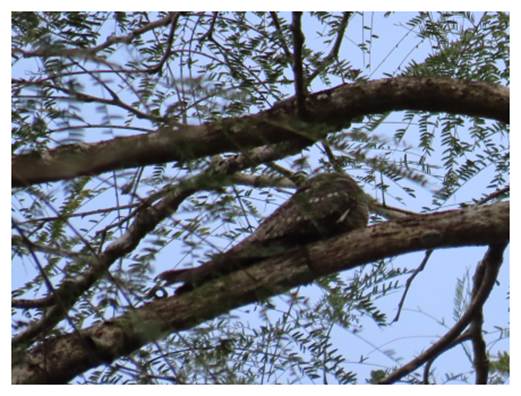
car park, some people were looking up at a big tree, and a Lesser Nighthawk
was well-camouflaged on a branch.
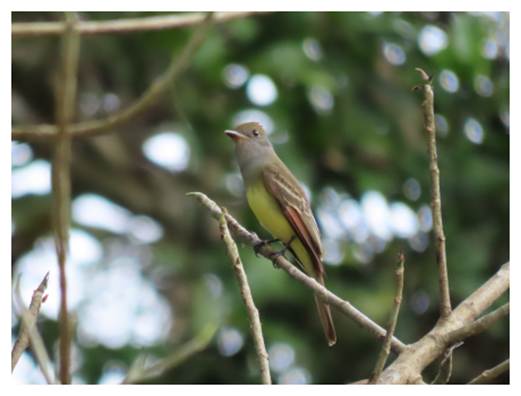
I think this is a Great Crested Flycatcher, also
around the car park. We also saw Dusky-capped Flycatcher.
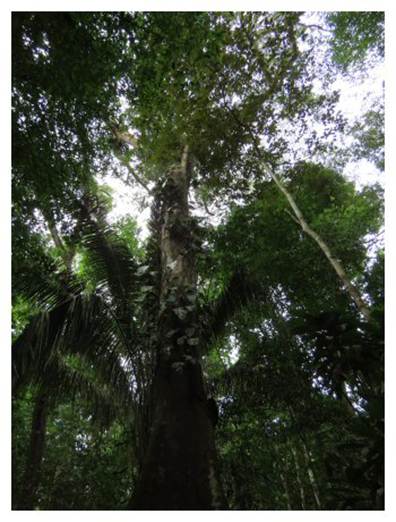
Walking into the lowland wet forest is an experience unlike
anything in Europe, and is an assault on the senses as the sounds and humidity
create a unique feel. The birding is unlike anything I have experienced as
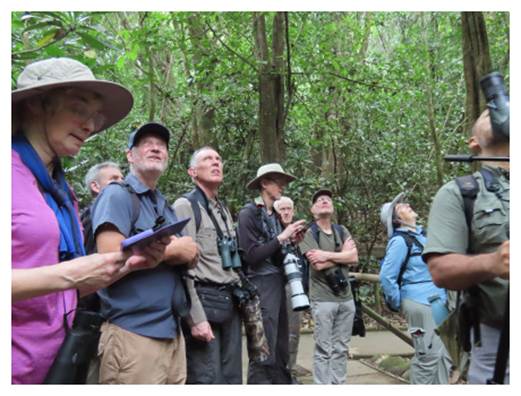
well, as picking out anything at all was very difficult. Luckily our guide had
an expert knack of finding the unfindable!
The list of birds we accumulated was impressive: Sulphur-rumped
Flycatcher, Yellow-crowned Euphonia, Short-billed Pigeon (and
its call, “who cooks for you?”), Lesser Greenlet, Yellow-breasted
Vireo, 3 Plain Xenops, Cocoa & Streak-headed
Woodcreepers, Crowned Flatbill (aka Eye-ringed Flatbill, which
describes it perfectly), Orange-billed Sparrow, Blue-black Grosbeak
(briefly as it flew across the river), 3 Ruddy Quail-Dove, Blue-throated
Goldentail & Purple-crowned Fairy (hummingbirds, up in the
canopy and very difficult to see well), Riverside Wren
and the aptly named Scaly-throated Leaftosser.
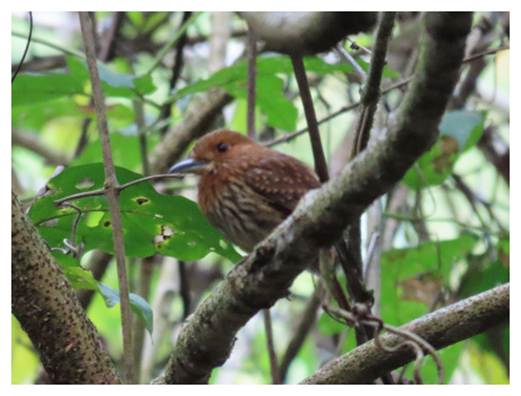
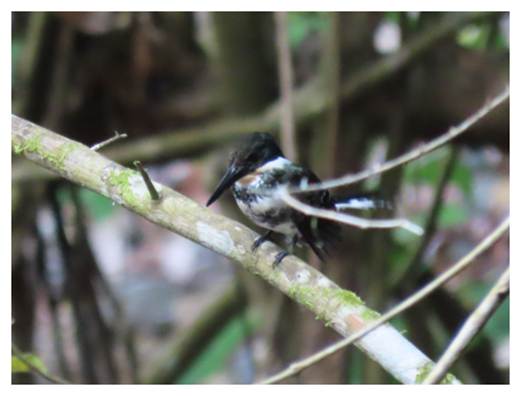
And a few I managed to photo . . .
White-whiskered Puffbird
Green Kingfisher
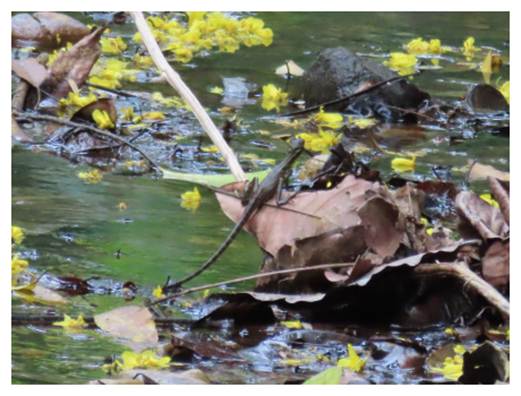
Northern Waterthrush

This looks like it may be a Water Anole (with
banded tail and white lateral body stripe).
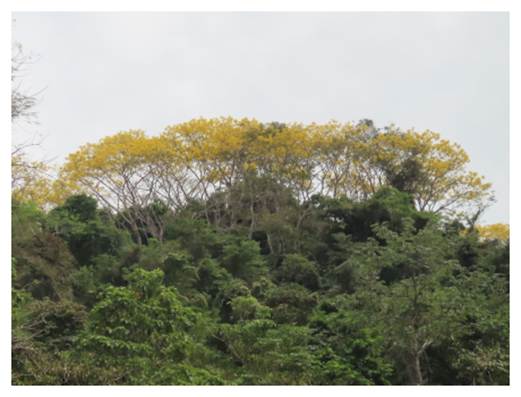
I presume that the yellow flowers above are from the lovely Cortez
Amarilla tree (Tabebuia ochracea) which only flower for 4 or 5
days, so we were lucky to see them.
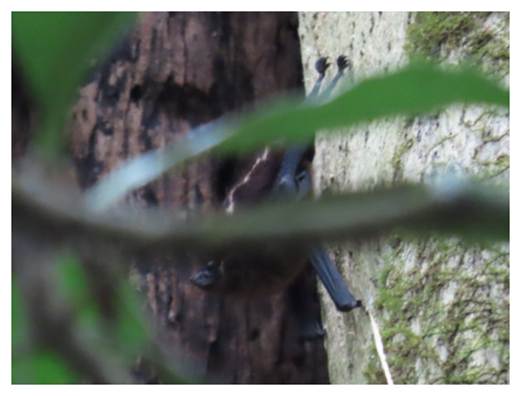
White-striped/Sac-wing Bat species,
just outside its roost in a hollow tree.
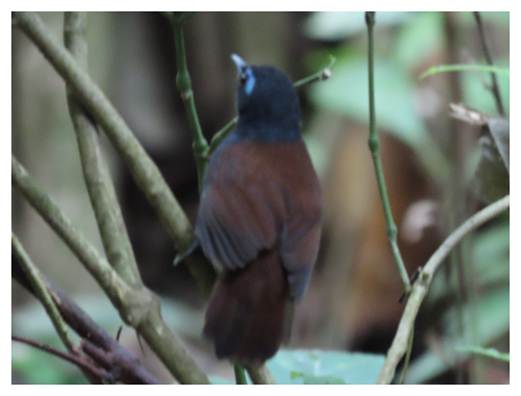
A lovely male Chestnut-backed Antbird (second photo by
Dave Reeson)
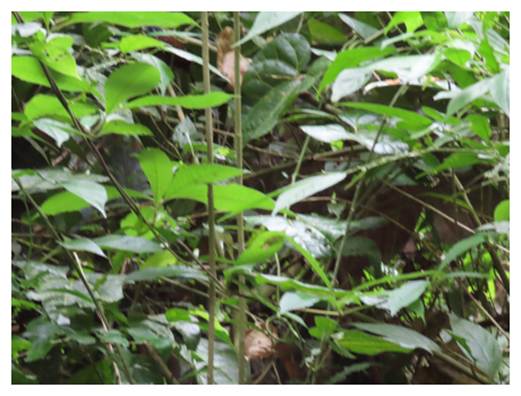
The following photo shows how difficult it was to find the
birds in this forest. The Chestnut-backed Antbird is at the top of the photo
just to left of the two parallel vertical sticks. (Zoom to find it !)
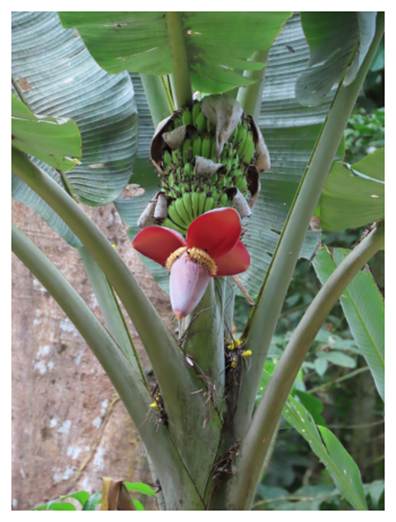
A Banana plant in the forest with fruit and
flower.
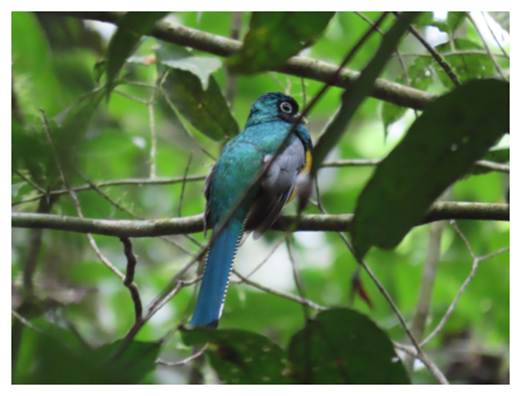
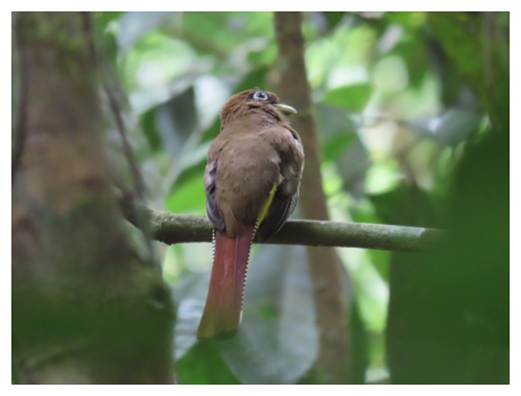
Black-throated Trogon male (photo by Dave
Reeson) and female. They are lovely birds that stay still in the open, and when
they turn their heads to look around, they do it in slow motion (so as not to
attract attention).
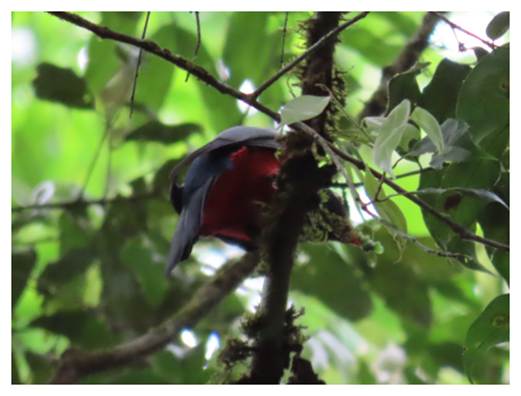
Slaty-tailed Trogon (you can see the red
bill on right of branch, and just about make out the reddish eye-ring).
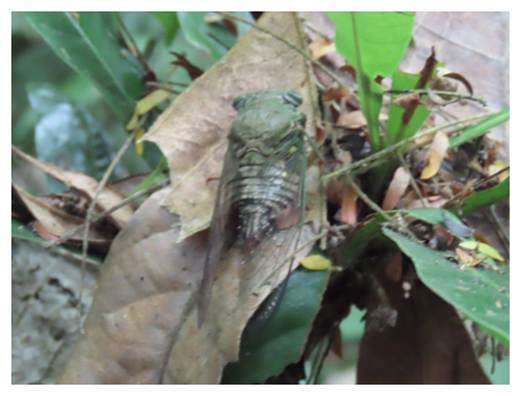
A large Cicada (about 7cm long).
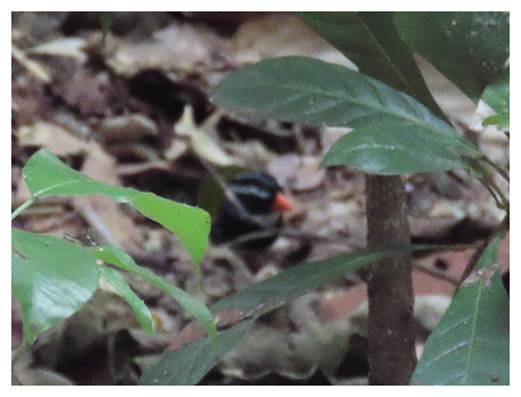
Orange-billed Sparrow on the forest floor.
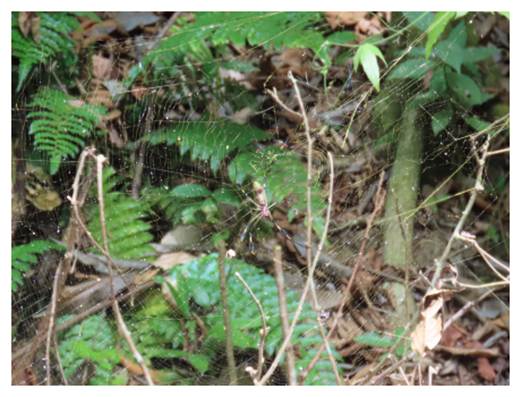
A large spider (15cm long) in a big web.

Visit 2 - In the afternoon we went back to Carara NP.
It is always quieter in the afternoon than in the morning in the forest, as the
temperature and humidity rise and the birds and animals have a rest. But our
guide kept plugging away and we had another good list of birds, including ones
not seen this morning: Barred (juv. male) and Black-hooded
Antshrikes, Long-billed Gnatwren, Tody Flycatcher, Acadian
Flycatcher, Southern Beardless Tyrannulet, a lovely Dot-winged
Antwren, Dusky Antbird and a pesky Black-faced Antthrush that
the guide spent 15 minutes trying to coax out of the greenery by mimicking its
call, only for it to stay just a few feet back from being seeable. And the
following that I photo’d . . .
Rufous-tailed Jacamar
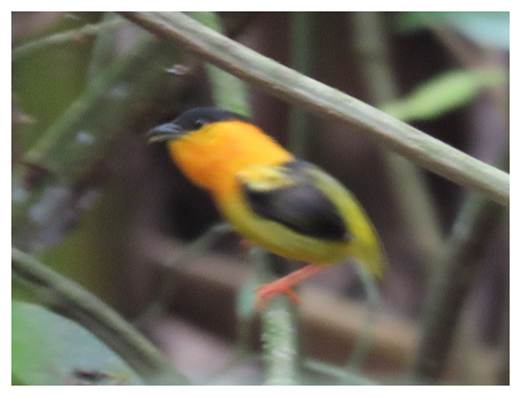
This lovely Orange-collared Manakin,
with its call like two pebbles knocked together. (It moved about a lot !)
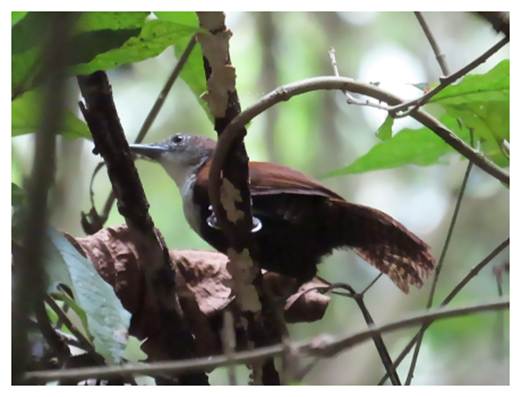
Black-bellied Wren
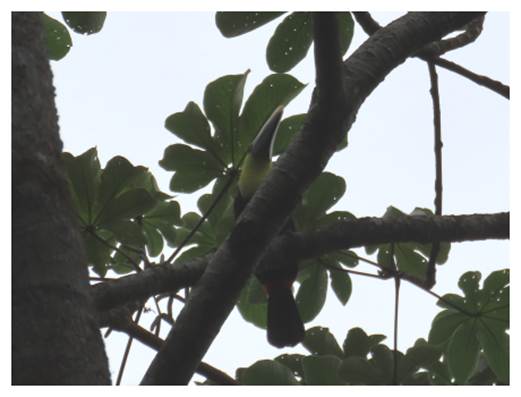
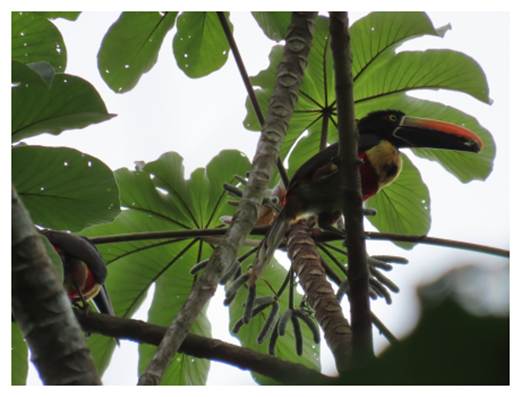
My first photo of a Toucan (Yellow-throated), up in
the canopy, with a couple of Fiery-billed Aracari.
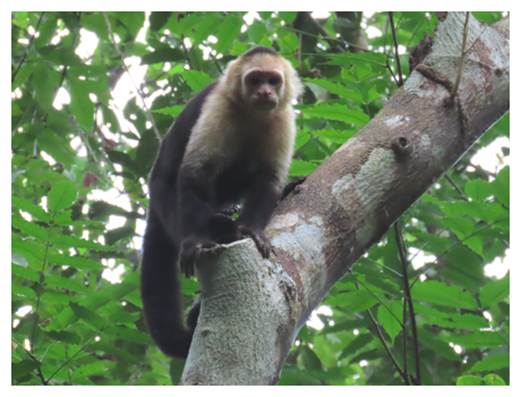
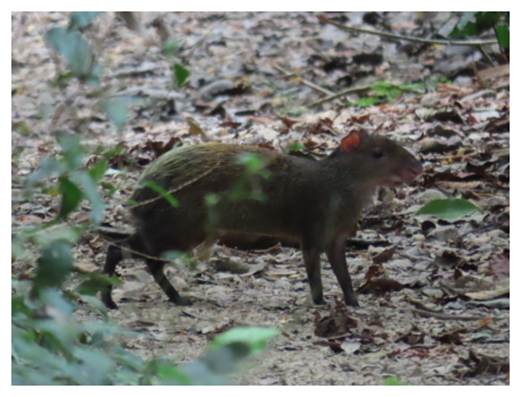
Our second Monkey species was a group of 3+ Capuchins,
and a couple of Agoutis crossed the path.
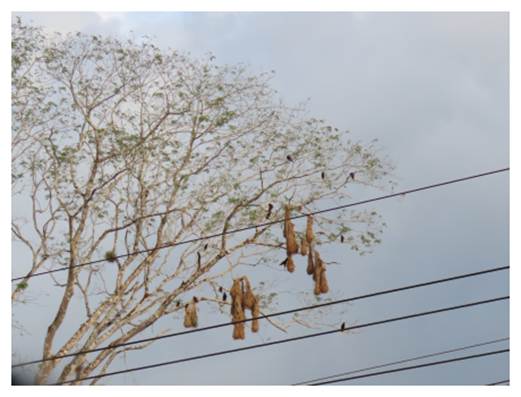
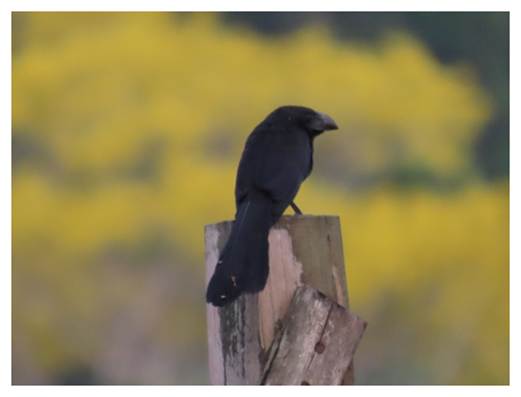
On the way back to the hotel we passed this colony of 20+ Montezuma
Oropendola with nests, and a Grove-billed Ani.
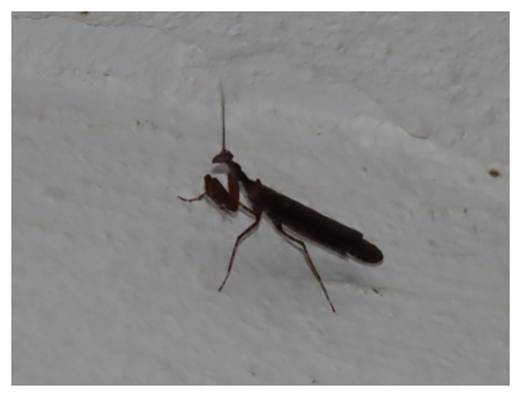
This small (5cm) Preying-Mantis species was
outside our room.
Day 5 (22nd Jan) Tarcoles Estuary
Hotel grounds (6am) This morning we
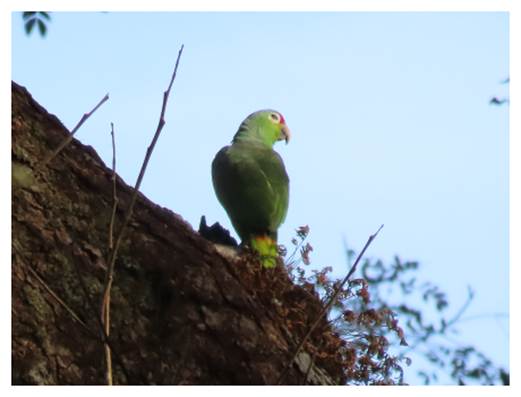
tried the front of the hotel and had good views of a few nice birds: a pair of Scarlet-rumped
Tanager, Red-lored Parrots (inc.
one sat in a tree – photo below), 2 Melodious Blackbird, Montezuma
Oropendola pecking flowers, a Rose-throated Becard (without any rose
throat in this area!), a Lesson’s Motmot, some Fiery-billed
Aracari, Rufous-tailed Hummingbird and a pair of Social
Flycatchers. Plus the Squirrel Monkey and a Variegated
Squirrel.
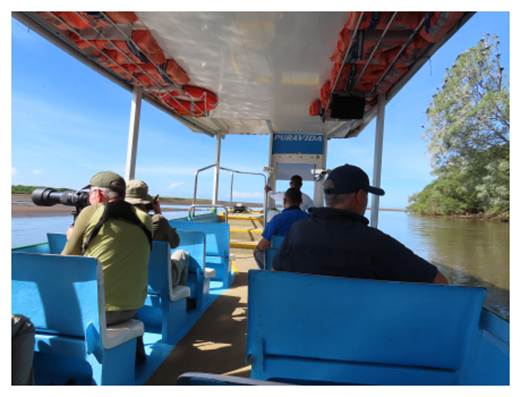
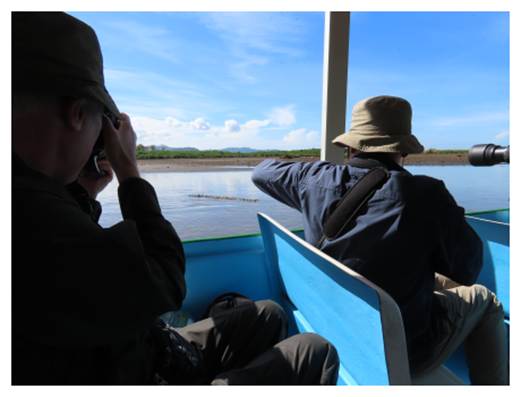
Boat trip on the Tarcoles River Estuary
– We were really looking forward to this, and it didn’t disappoint.
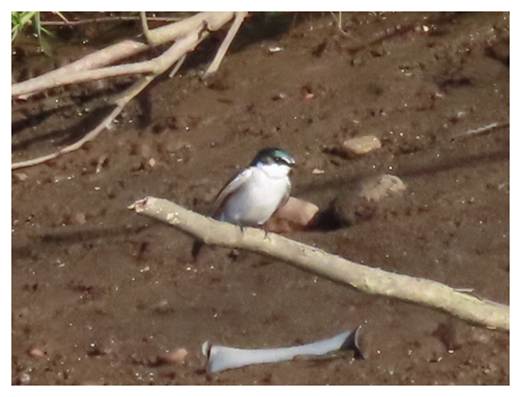
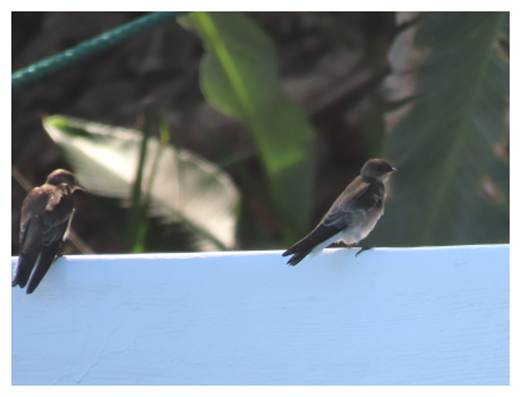
Blue-and-white Swallows were nesting on
the roof of the boat and followed us around ! Also this Mangrove Swallow
(first photo), a few Barn Swallows and Northern Ruff-winged Swallows.
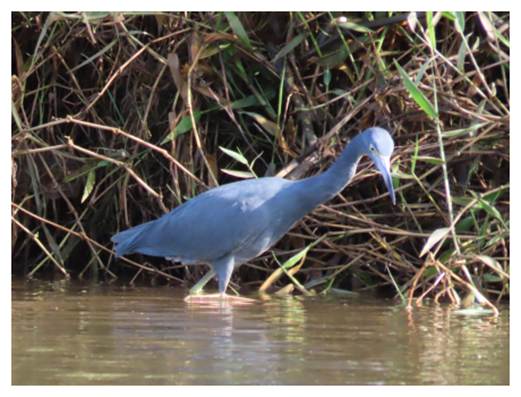
We had a very good list of Herons: Little Blue (both
photo’s below),
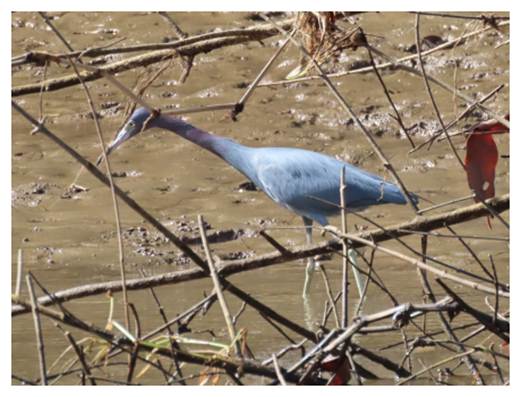
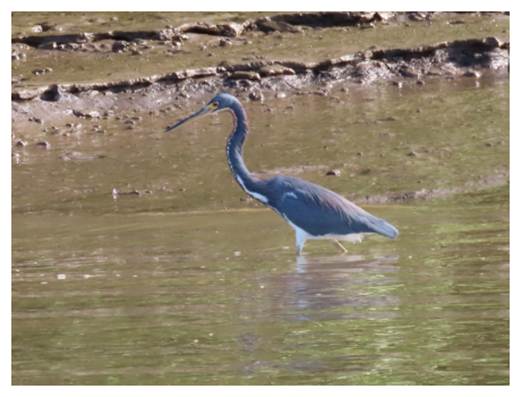
Tricoloured, and Reddish Egret (photo
by Dave Reeson), . . .
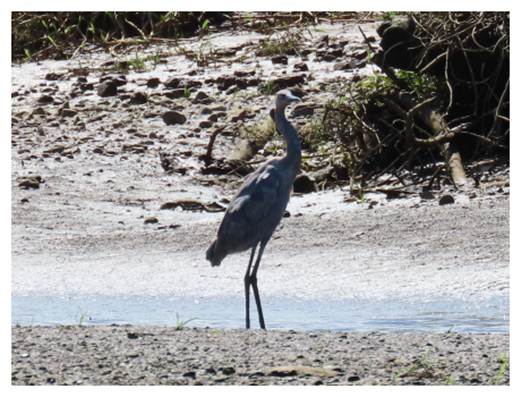
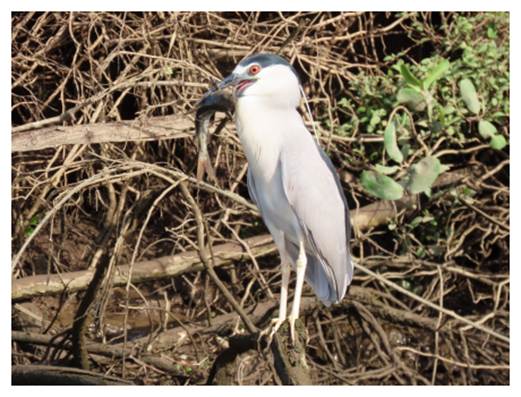
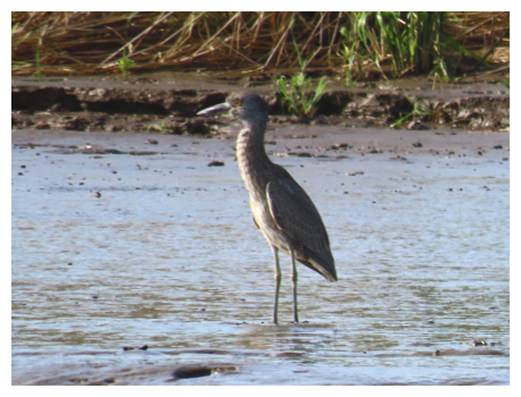
Black-crowned Night-Heron (ad + juv.)
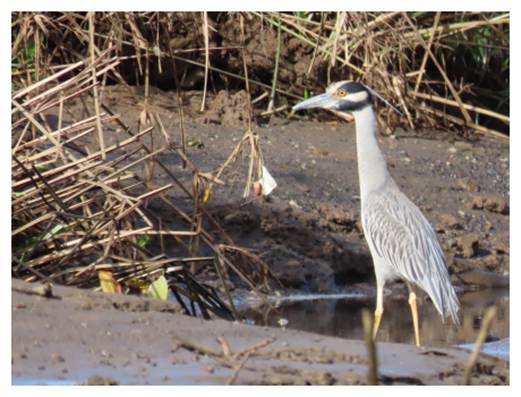
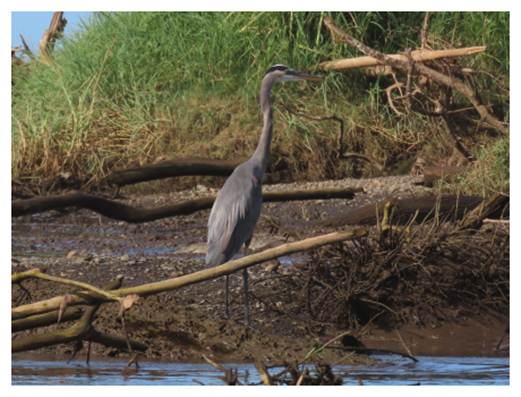
Yellow-crowned Night-Heron and Great Blue
Heron, . . .
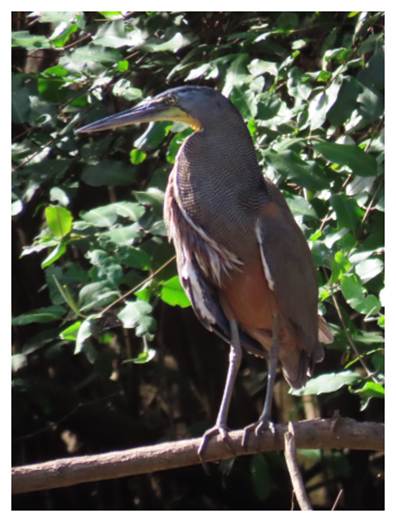
Bare-throated Tiger-Heron, . . .
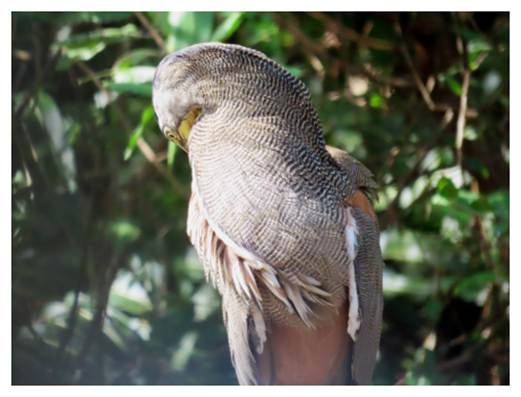
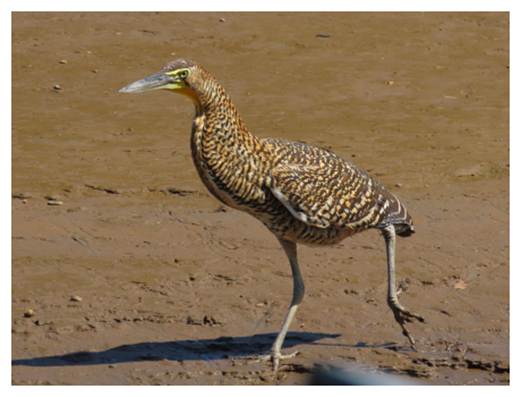
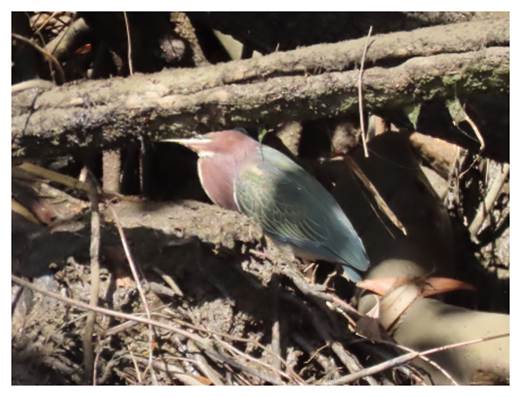
The juvenile Bare-throated Tiger-Heron is even more
stunning than the adult ! And a hiding Green Heron.
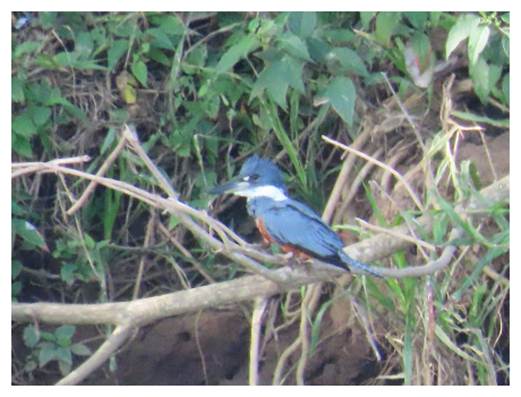
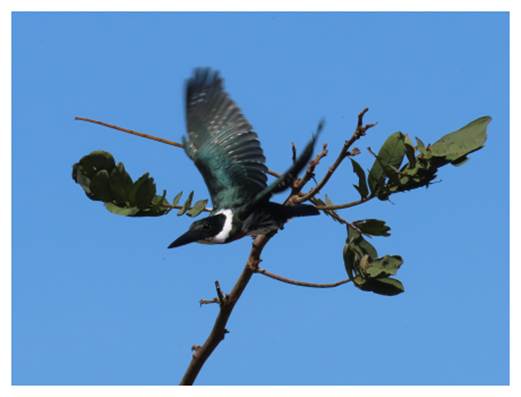
We also had nearly a complete list of Costa Rica’s
Kingfishers: Ringed (the largest in the Americas; huge at 40cm long),
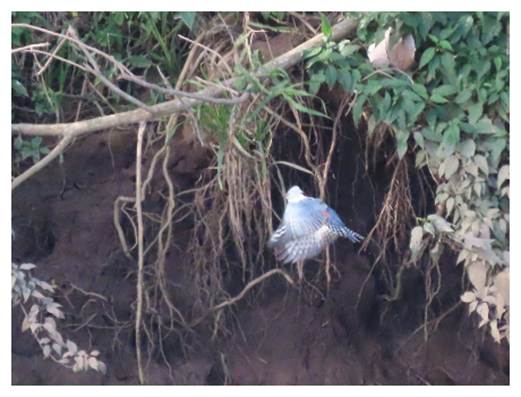
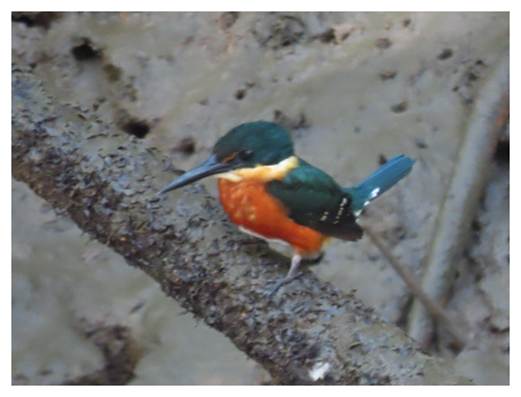
then American Pygmy (the smallest in the Americas, at
a tiny 13cm long), in the mangroves,
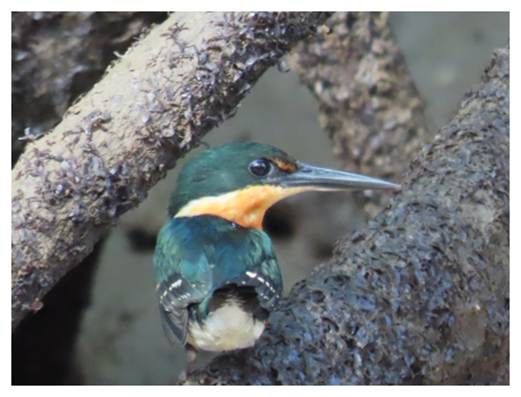
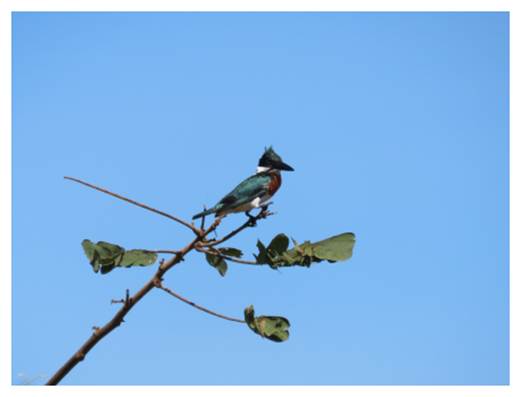
the Amazon, (also large, at 28cm) . . .
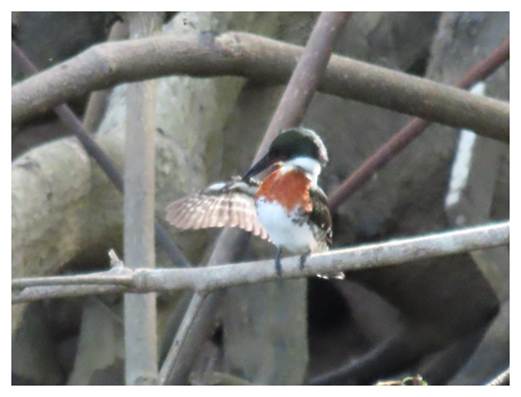
And the Green (small, at 18cm).
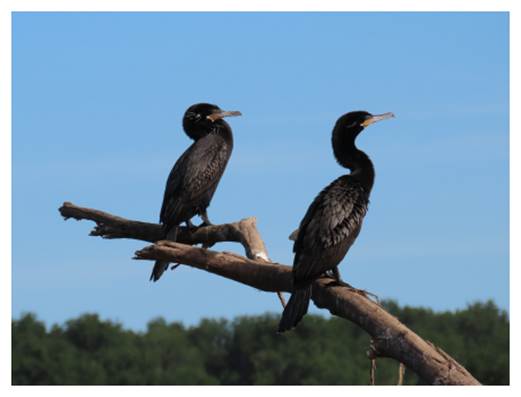
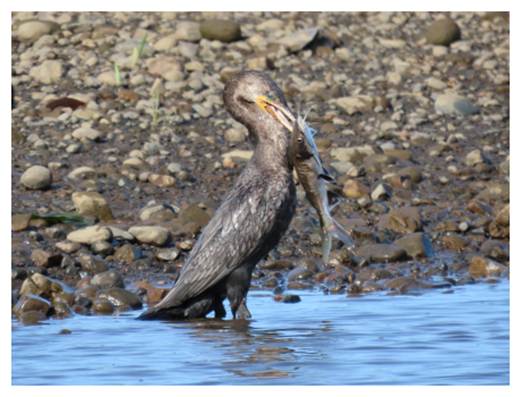
Neotropic Cormorants (adults and juv. with
Catfish)
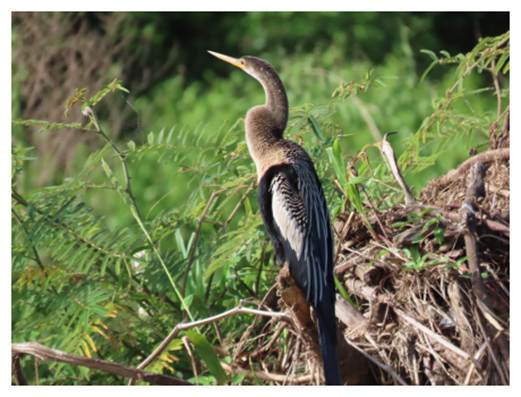
Anhinga
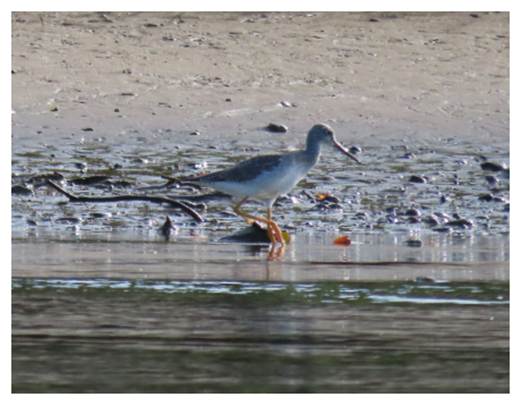
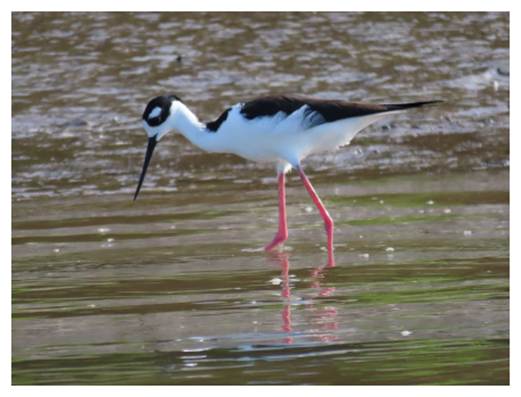
Greater Yellowlegs and Black-necked Stilt
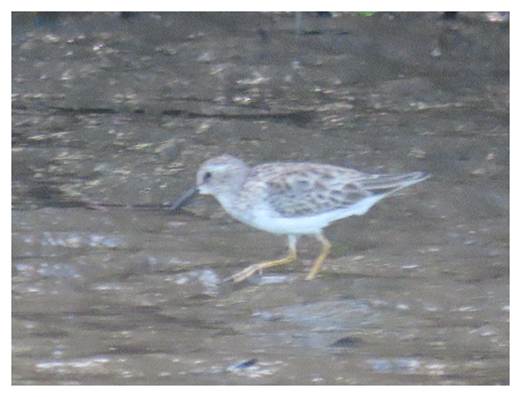
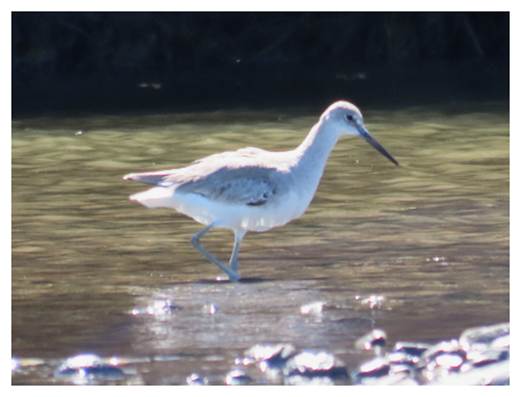
Least Sandpiper and Willet (which
we only got towards the end of the trip).

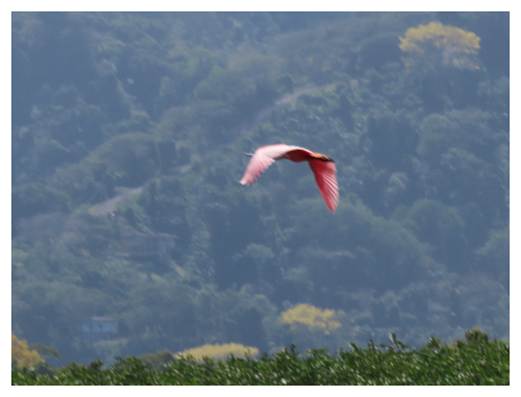
Roseate Spoonbill (with Great White
Egret and in flight, with flowering trees behind). Also Cattle and Snowy
Egrets, and White Ibis’s.
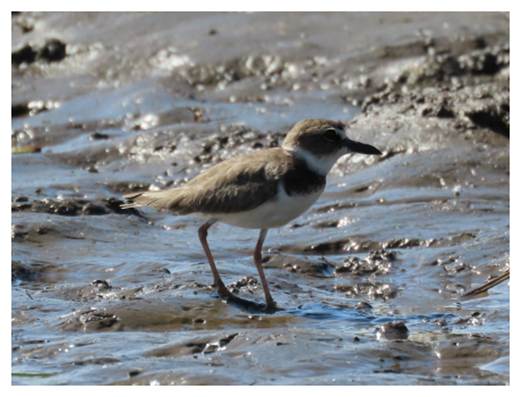
Wilson’s Plover (with thick bill). There
were lots of Least Sandpipers, Western Sandpipers, Semipalmated
Sandpipers, Spotted Sandpipers, Collared Plover and Semi-palmated
Plovers. Also, a Hudsonian Whimbrel, a couple of Turnstone
and a Grey Plover (which both seemed out-of-place here !).

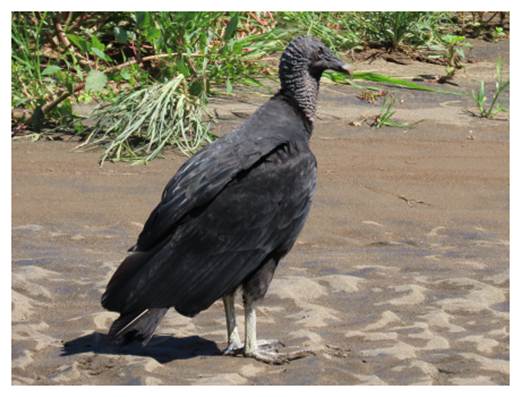
Wood Stork with Western
Sandpiper! And a Black Vulture on the shore.

There were about 500 Magnificent Frigatebirds flying
around the estuary and roosting in trees.
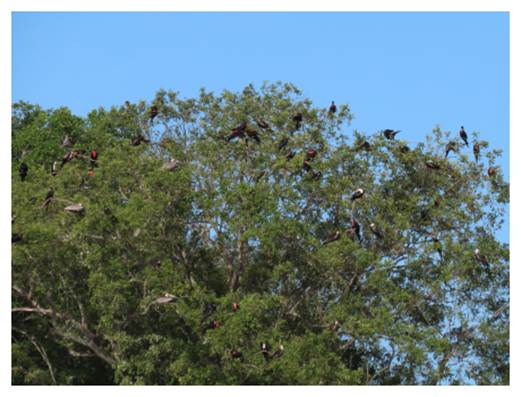
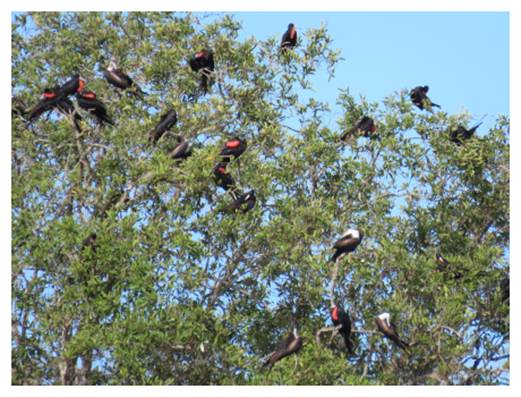
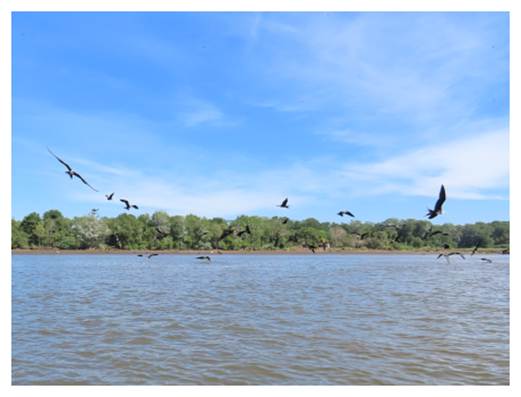
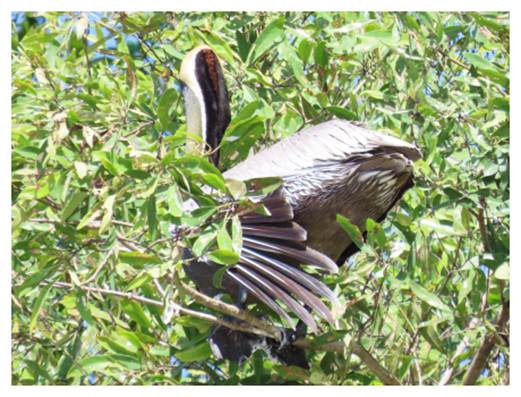
Brown Pelicans were in the same trees,
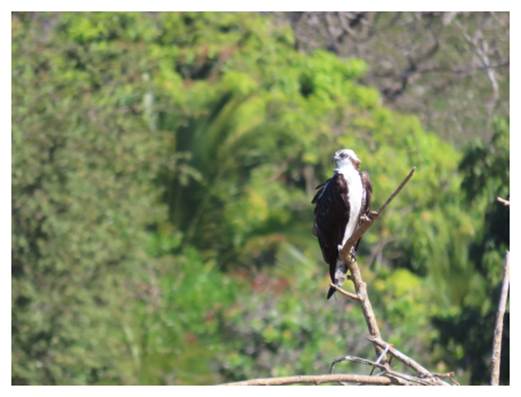
and this Osprey was very much a side show!
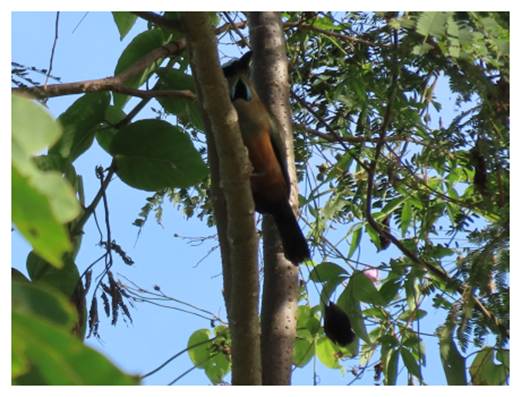
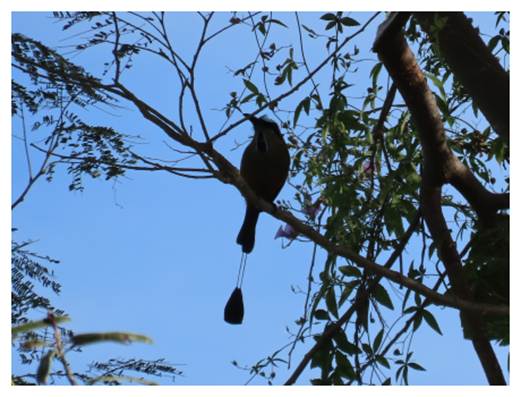
Lesson’s Motmot
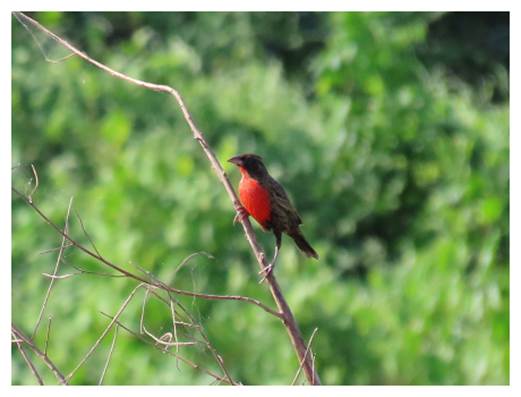
Red-breasted Blackbird and Inca Dove.
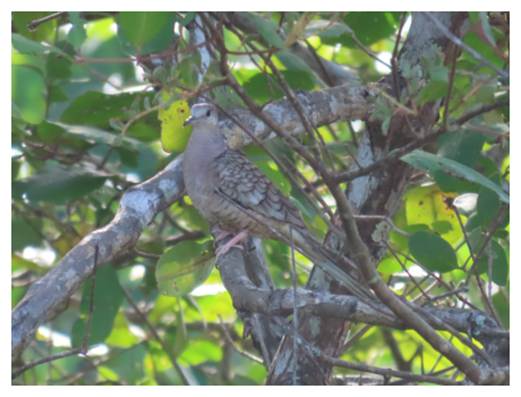
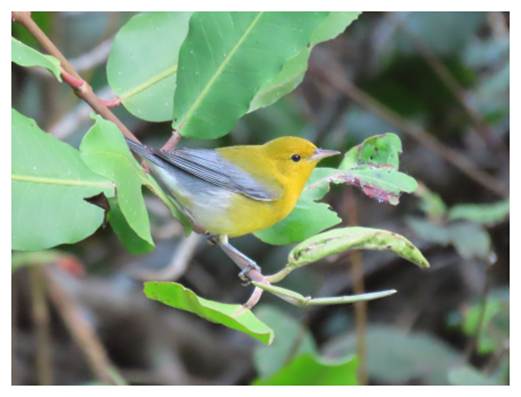
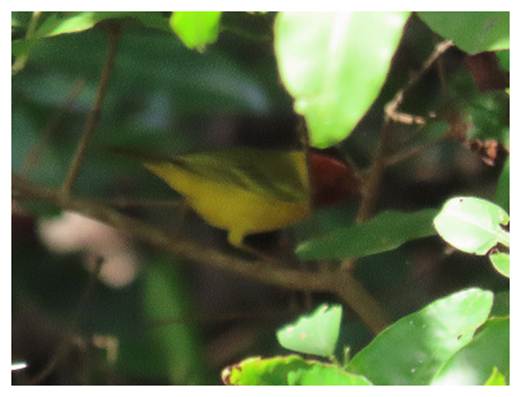
Prothonotary Warbler and Mangrove Warbler
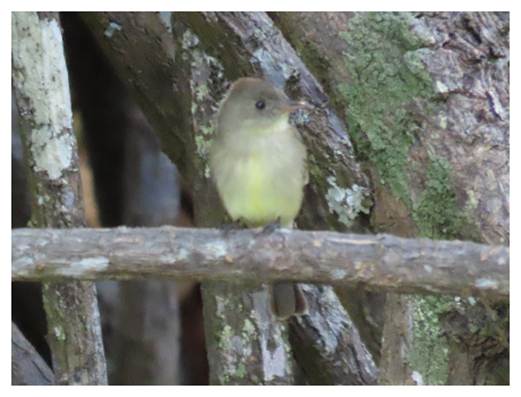
Panama Flycatcher ? We also had Common
Tody-flycatcher.
Plus, we saw Philadelphia and Mangrove Vireo,
Northern Waterthrush and 3 Black Hawk. 30 Royal Terns and Laughing
Gulls (plus some Sanderlings, apparently) were roosting on the
beach.
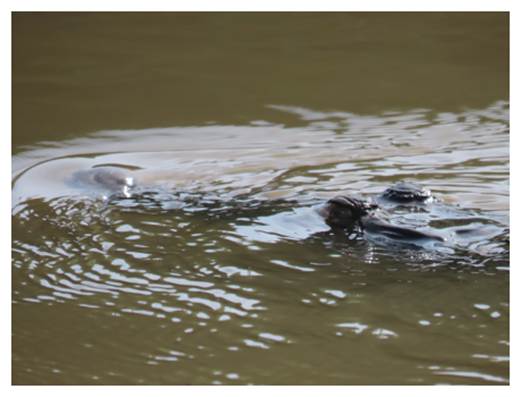
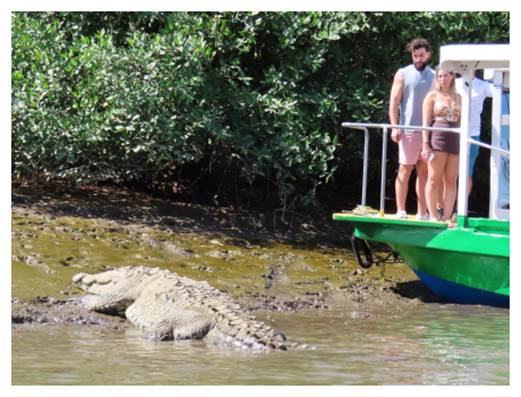
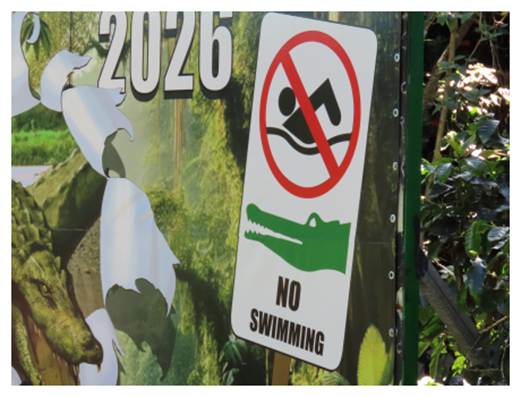
There were lots of Crocodiles about!

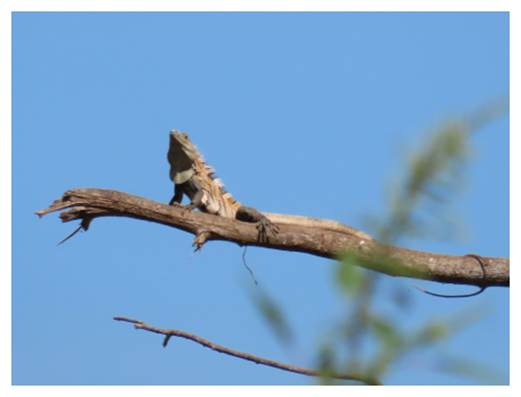
And a couple of large Iguana’s - Green and Black (aka
Spiney-tailed).
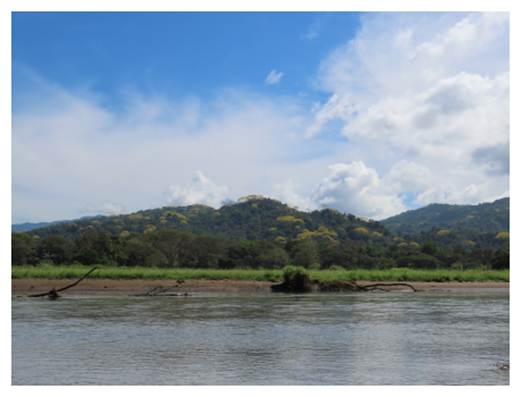
What a beautiful place.
The third instalment of the trip is here.
Copyright.
Last revised: 26 Mar 2026.